
Protein Quality Control and Aging: What Ribosome Study Reveals
Myth #1: "Scientists have found the cause of aging at the cellular level."
Myth #2: "This research points to a new treatment for cystic fibrosis."
Myth #3: "If quality control fails, disease is inevitable."
Myth #4: "Protein quality control decline is something people can test for or reverse today."
Introduction
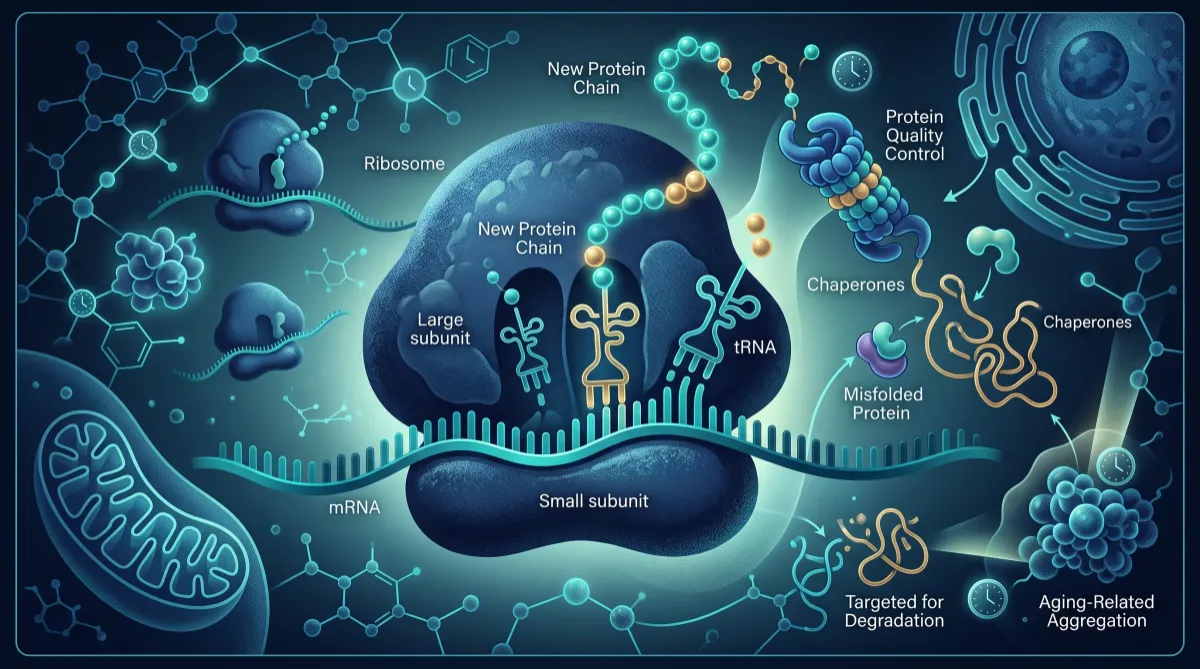
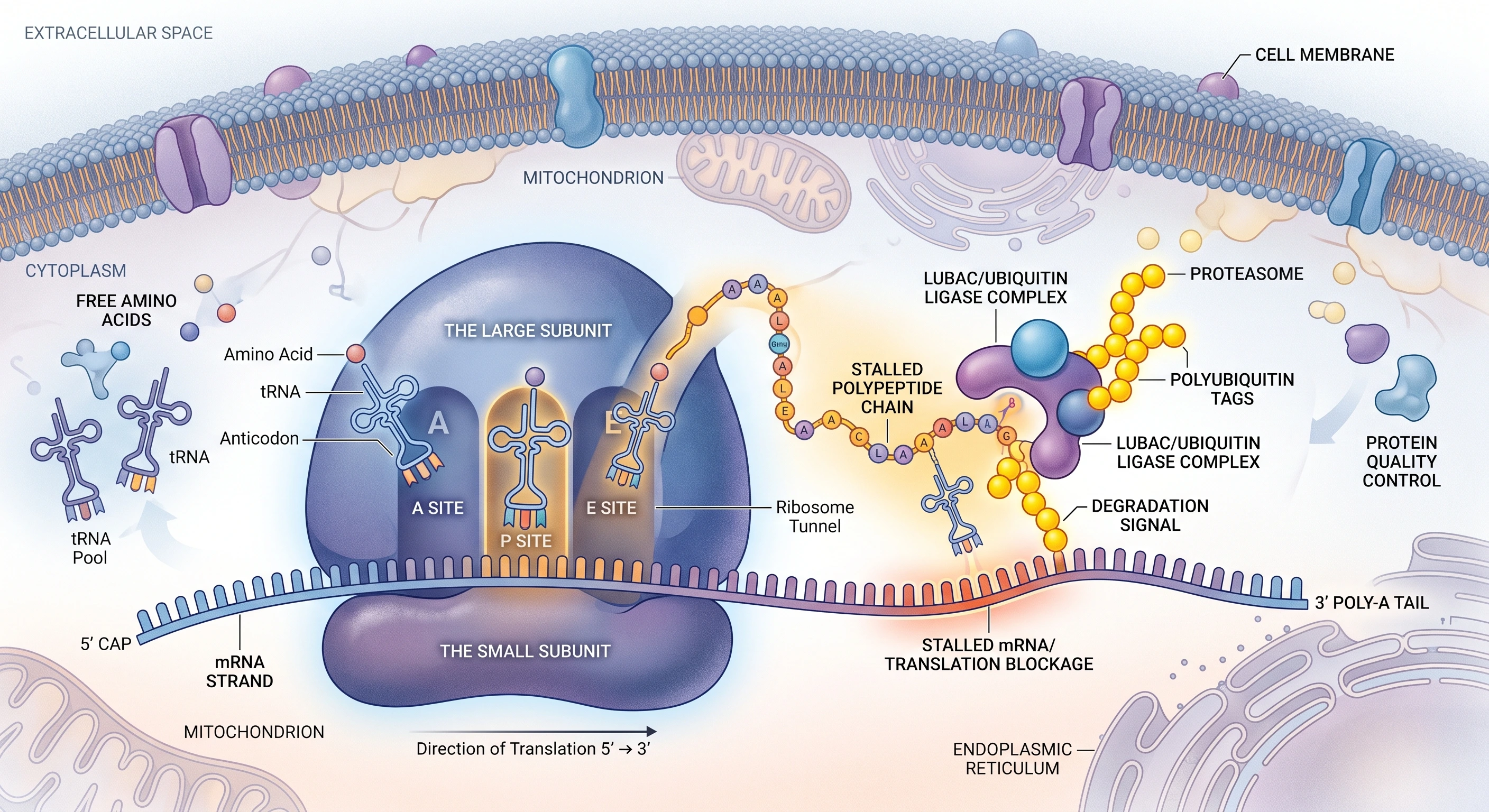
Every human cell depends on the ribosome, a molecular machine that reads genetic instructions and assembles proteins one amino acid at a time — producing over 10,000 different proteins, roughly a quarter of them embedded in the cell membrane. Because these membrane proteins must fold correctly while threading through a lipid-rich environment, ribosomes sometimes stall partway through construction, generating incomplete, potentially harmful fragments. Cells manage this risk through ribosome-associated quality control (RQC), a surveillance system that detects stalled ribosomes and clears the defective output before it accumulates.
A new study from the Center for Molecular Medicine Cologne (CMMC) and the CECAD Cluster of Excellence on Aging Research, published in The EMBO Journal, examines how this system behaves when ribosomes attempt to build especially difficult transmembrane proteins. Led by Dr. Débora Trentini and first author Dr. Tom Oldfield, the team used CFTR — the transmembrane protein implicated in cystic fibrosis — as a model to study how translation arrest and RQC activation interact with a clinically relevant protein. This is a useful moment to separate what the data actually shows from the more dramatic narratives surrounding cellular aging research.
Myths vs. Clinical Reality
News coverage of ribosome biology and cellular quality control tends to compress complex, incremental science into dramatic headlines. Below, we separate the most common misconceptions from what this study — and the broader field of protein quality control research — actually demonstrates.
Myth #1: "Scientists have found the cause of aging at the cellular level."
Clinical Reality: This study does not identify a single "cause" of aging. It describes one specific mechanism — how ribosomes handle translation of a particularly challenging class of proteins (transmembrane proteins) — and how quality control systems respond when that process fails. As specialists in the field, we note that aging is understood as a multifactorial process involving dozens of interacting pathways, of which RQC is only one component under active investigation.
Myth #2: "This research points to a new treatment for cystic fibrosis."
Clinical Reality: The study used CFTR, the protein implicated in cystic fibrosis, strictly as an experimental model to understand translation dynamics — not to test or validate any therapy. The researchers themselves describe their fluorescent reporter system as a tool for measuring how often ribosomes complete CFTR translation successfully. As specialists reviewing this literature, we would highlight that no intervention, drug, or clinical protocol was tested in this paper; the authors explicitly frame their findings as groundwork for future research into possible ways to help ribosomes overcome stalling.
Myth #3: "If quality control fails, disease is inevitable."
Clinical Reality: The study found that a small proportion of CFTR translation events arrest regardless of disease-associated mutations or existing cystic fibrosis medications — suggesting this is a baseline biological phenomenon, not solely a disease-driven one. Ribosome stalling and RQC activation appear to be an intrinsic feature of building difficult proteins, not an all-or-nothing switch between health and illness. As specialists, we would note that the clinical significance of this baseline stalling rate — and whether it meaningfully affects chloride channel levels in patients — remains an open question for future research, not a conclusion this paper draws.
Myth #4: "Protein quality control decline is something people can test for or reverse today."
Clinical Reality: There is currently no validated clinical test that measures ribosome-associated quality control activity in an individual, and no approved intervention designed to enhance this specific pathway. The methods used in this study — engineered fluorescent reporter constructs in cultured cells — are laboratory research tools, not diagnostics. As specialists, we would caution against extrapolating basic cell-biology findings into consumer health claims; the distance between a mechanistic discovery in cultured cells and a clinically actionable intervention is typically measured in years of additional research.
When Should You Consult a Specialist?
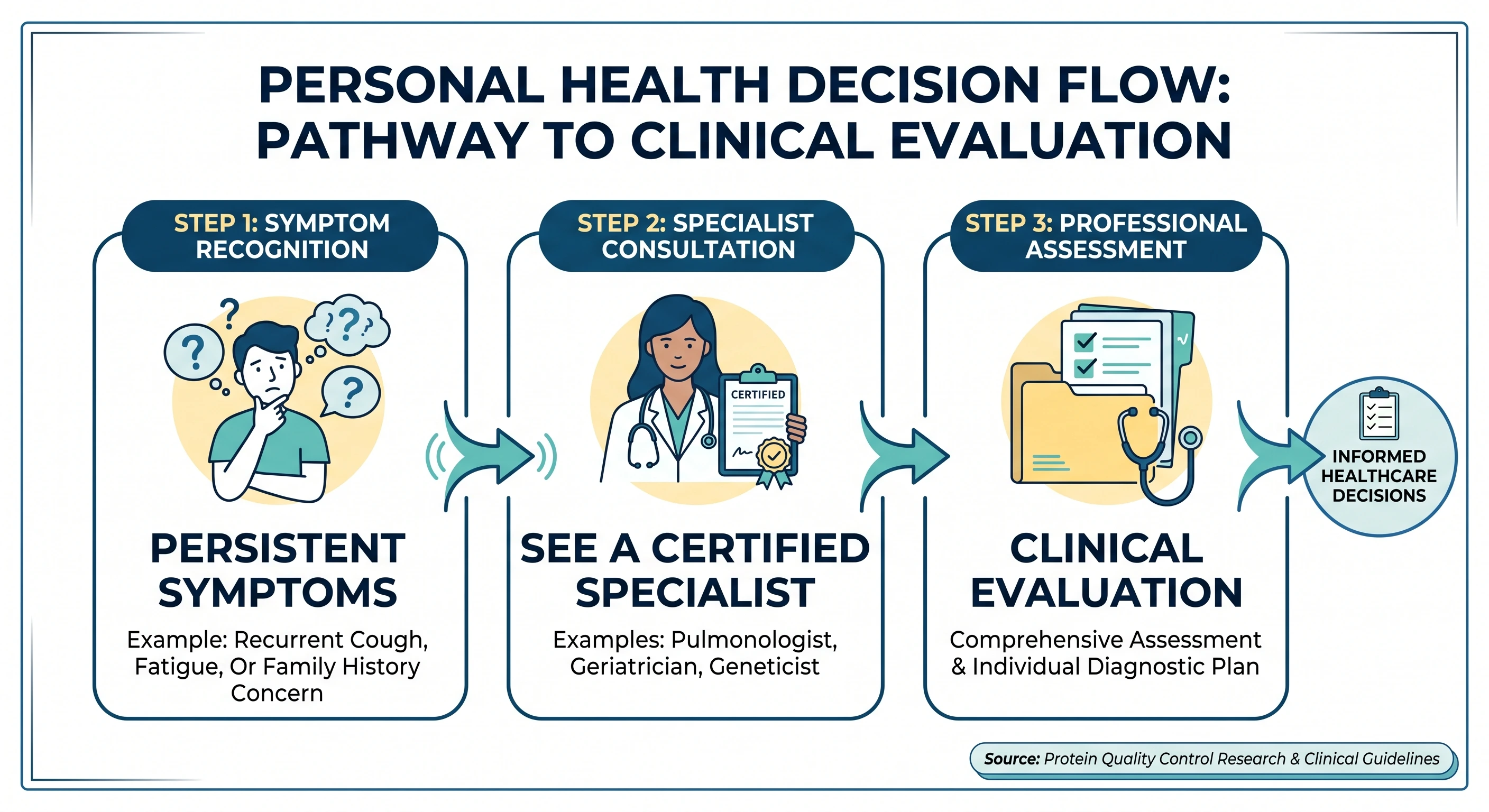
While this specific study is basic research rather than a clinical development, it touches on biological themes — protein misfolding, cellular stress responses, and organ-specific dysfunction — that do have established clinical relevance. General guidance on when to seek professional evaluation includes:
Persistent respiratory, digestive, or exocrine symptoms (e.g., recurrent lung infections, malabsorption, unexplained salt loss in sweat) that could warrant screening for conditions like cystic fibrosis — consult a board-certified pulmonologist or geneticist.
A family history of a genetic condition linked to transmembrane protein dysfunction — a conversation with a certified genetic counselor can clarify testing options and what they can and cannot tell you.
Concerns about age-related decline in organ function or general vitality — a geriatrician or internal medicine specialist can evaluate symptoms in the context of validated clinical assessments, rather than emerging laboratory findings.
Interest in participating in research on protein quality control or aging biology — inquire through an academic medical center's clinical research office, which can confirm whether relevant trials are actively recruiting.
In all cases, decisions about diagnosis, testing, or treatment should be made with a licensed, certified specialist who can evaluate an individual's full clinical history — not on the basis of a single laboratory study.
Conclusion
The CMMC/CECAD study adds a precise, mechanistic piece to a larger puzzle: how cells manage the difficulty of building transmembrane proteins, and what happens when that process falls short. Its use of CFTR as a model — rather than a therapeutic subject — is a reminder that most advances in aging biology arrive as incremental clarifications of mechanism, not ready-made interventions. The more accurate takeaway is that ribosome quality control is one of many interlocking systems researchers are still mapping, and that translating such findings into anything clinically actionable will require substantially more evidence.
This article reflects the professional opinion of Dr. Aleksandr Orlov of the Precision Bioclinic team when consulted on the topic discussed above. It is intended for general educational and informational purposes only and does not constitute medical advice, diagnosis, or treatment recommendations.