
Personalized Cell Therapy for Kidney Cancer: What's Real
Table of Contents
Myth: "This is now an approved treatment for kidney cancer."
Myth: "If it worked for this patient, it will work for kidney cancer in general."
Myth: "One successful case is equivalent to clinical proof."
Introduction
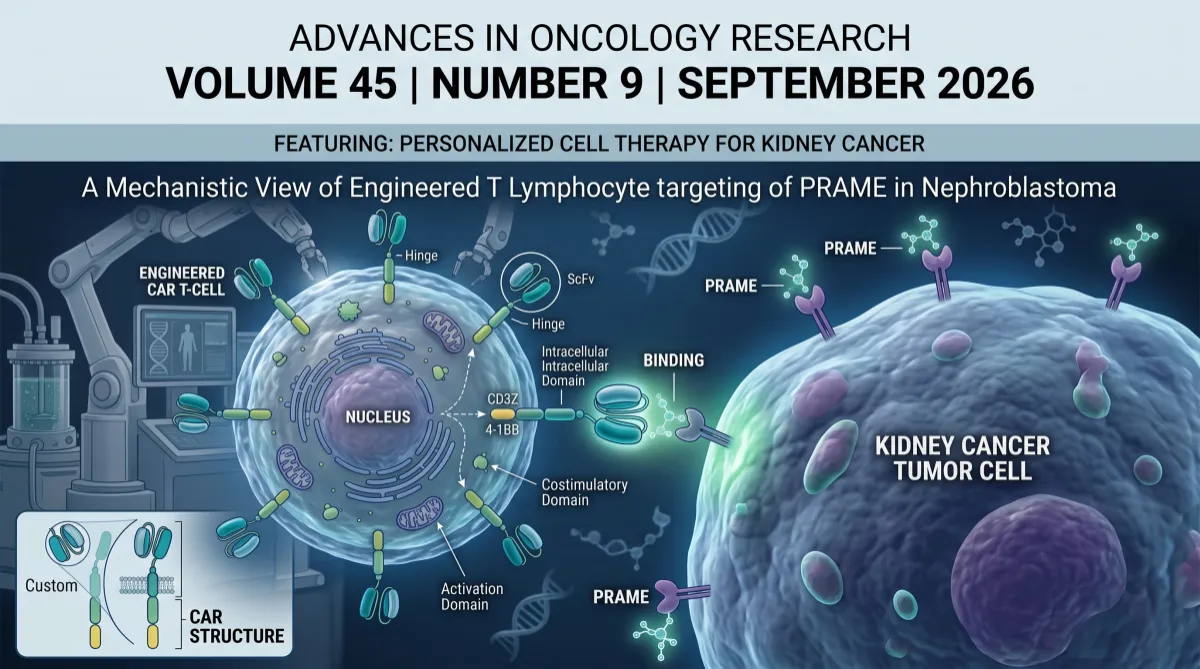
In August 2026, researchers at the Hopp Children's Cancer Center Heidelberg (KiTZ) — a joint institution of the German Cancer Research Center (DKFZ), Heidelberg University Hospital, and Heidelberg University — published a case in the New England Journal of Medicine that has drawn wide attention across oncology circles. The report describes an adolescent, treated at age 17 for an advanced, treatment-resistant kidney tumor (nephroblastoma) that had already spread to the lungs, liver, pelvis, and brain after a decade of relapses. One year after receiving a personalized cell therapy, the patient showed no evidence of active disease.
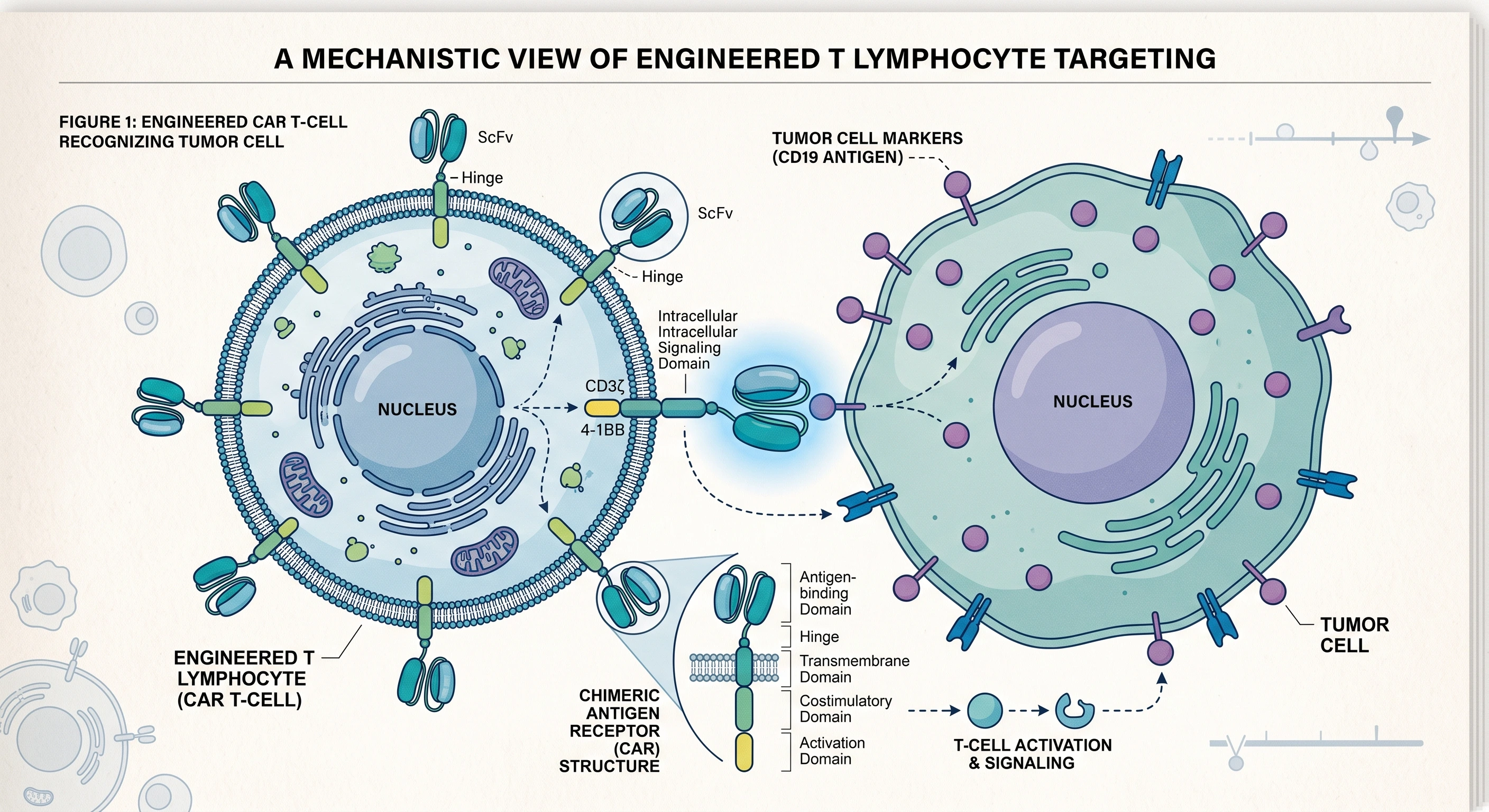
The approach used genetically engineered T cells designed to recognize PRAME, a protein target already established in immunotherapy research for adult cancers such as melanoma. Because no curative options or suitable clinical trials were available at the time, the treatment was administered on a compassionate-use basis — authorized for this single patient outside the framework of a formal clinical trial. A broader trial is now being planned for 2027.
Myths vs. Clinical Reality
Media coverage of single-patient breakthroughs tends to produce a predictable set of misunderstandings. Below, we address the most common ones directly.
Myth: "This is now an approved treatment for kidney cancer."
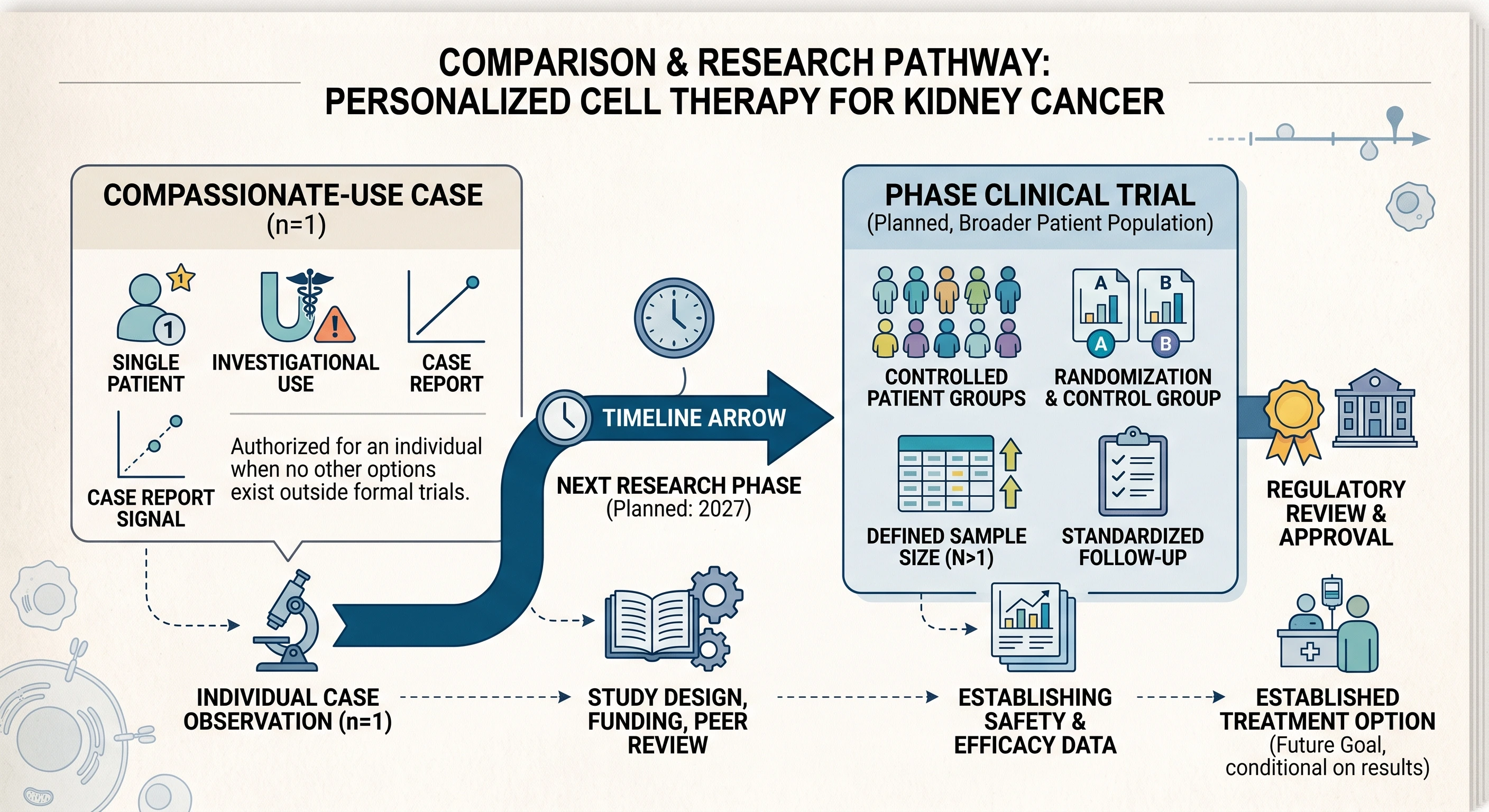
Clinical Reality: The therapy was delivered to a single patient under compassionate use, a regulatory pathway that allows an experimental intervention to be offered to one individual when no other options exist — it is not the same as regulatory approval, and it does not mean the therapy is available to patients generally. As specialists in the field, we observe that the formal clinical trial needed to establish safety and efficacy across a broader patient population has not yet begun; it is planned to start in 2027, backed by dedicated research funding. Until that trial is completed and its results are peer-reviewed, this remains an investigational approach, not a treatment option outside a research setting.
Myth: "If it worked for this patient, it will work for kidney cancer in general."
Clinical Reality: The tumor type in this case, nephroblastoma (also known as Wilms tumor), is a pediatric kidney cancer that is biologically distinct from renal cell carcinoma, the form of kidney cancer most commonly diagnosed in adults. The therapy targeted PRAME, a marker that is well characterized in certain adult cancers, but its relevance and behavior can vary considerably by tumor type and by each patient's individual tumor biology. As specialists in the field, we note that a single favorable outcome — however striking — cannot be generalized into a claim about efficacy across kidney cancer as a category. Controlled studies across defined patient groups are what determine whether, and for whom, a therapy actually works.
Myth: "One successful case is equivalent to clinical proof."
Clinical Reality: In evidence-based medicine, an individual case report is valuable as a signal that warrants further investigation, not as proof of efficacy. Case reports lack the elements that allow conclusions to be drawn reliably: a control group, randomization, a defined sample size, and standardized follow-up across many patients. As specialists in the field, we consider it important to communicate this distinction clearly, precisely because the emotional impact of an individual success story can outweigh its actual statistical weight in the public conversation. This is not a criticism of the finding — it is a reminder of what the next research phase exists to establish.
When Should You Consult a Specialist?
For patients and families navigating a kidney cancer diagnosis — pediatric or adult — cellular immunotherapies of this kind are, at present, a research frontier rather than a standard treatment option. That said, there are clinical situations in which it is appropriate to seek specialized evaluation and ask directly about advanced or investigational options:
Disease that has relapsed after standard treatment, particularly when it recurs more than once or spreads to new sites.
Tumors that no longer respond to conventional chemotherapy, surgery, or radiation, where standard protocols have been exhausted.
A diagnosis in a child or adolescent with a rare or aggressive kidney tumor subtype, where treatment decisions benefit from centers with pediatric oncology expertise.
Interest in clinical trial eligibility, since access to investigational cellular therapies is generally only possible through structured research programs, not through routine outpatient care.
In any of these situations, the appropriate step is consultation with a certified oncologist or a pediatric hematologist-oncologist, who can assess eligibility for clinical trials at recognized academic or research centers and explain, case by case, what investigational options may or may not be relevant.
Conclusion
The Heidelberg case is a genuinely notable data point in personalized cellular immunotherapy, adding to evidence that engineered T-cell approaches proven in adult cancers may eventually extend to pediatric solid tumors with historically few options. But scientific rigor requires holding two ideas at once: this is meaningful early evidence, and it is not yet a validated treatment. The gap between one compelling case and an established therapy is exactly what the planned 2027 trial is designed to measure. Until then, cautious optimism grounded in what the data can — and cannot — yet show is the responsible reading of this story.
This article reflects the professional opinion of Dr. Aleksandr Orlov of the Precision Bioclinic team, affiliated with PrecisionBio Clinic, when consulted on the topic discussed above, alongside Carlos López (CEO). It is intended for general educational purposes only and does not constitute medical advice, diagnosis, or a treatment recommendation.