
Ketogenic Diet and Liver Fat: What a New Clinical Trial Really Shows
Table of Contents
Introduction: A Headline Worth Reading Carefully
Myth 1: "Keto is the best diet for everyone with fatty liver."
Myth 2: "The results will be the same at home."
Myth 3: "Eating more fat doesn't affect cholesterol, so it's harmless."
Myth 4: "Keto cured prediabetes."
Myth 5: "If diet composition matters, weight loss doesn't."
When Should You Consult a Specialist?
Introduction: A Headline Worth Reading Carefully
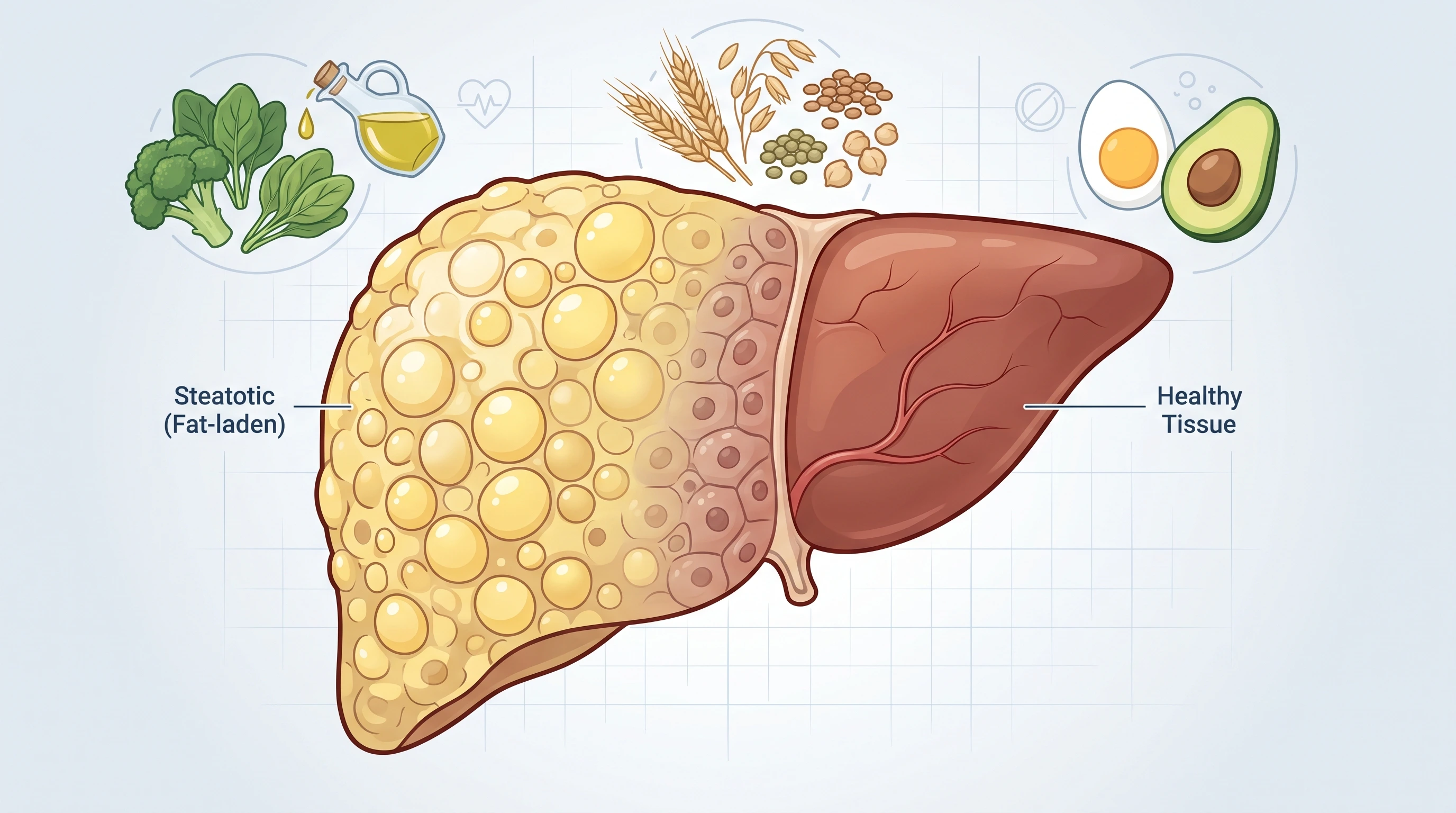
Fatty liver disease, now called metabolic dysfunction-associated steatotic liver disease (MASLD), is among the most common chronic conditions today. It often accompanies obesity, insulin resistance, and prediabetes, and rarely causes symptoms until it has progressed.
So a headline claiming a ketogenic diet cut liver fat by 67% spread quickly. The figure comes from a randomized trial led by Washington University School of Medicine in St. Louis, published in Cell Metabolism in August 2026, comparing ketogenic, Mediterranean, and low-fat plant-forward diets in adults with obesity, prediabetes, and fatty liver disease. It is relevant to ketogenic diet, liver fat, and metabolic health research, but one number rarely tells the whole story.
What the Study Actually Did
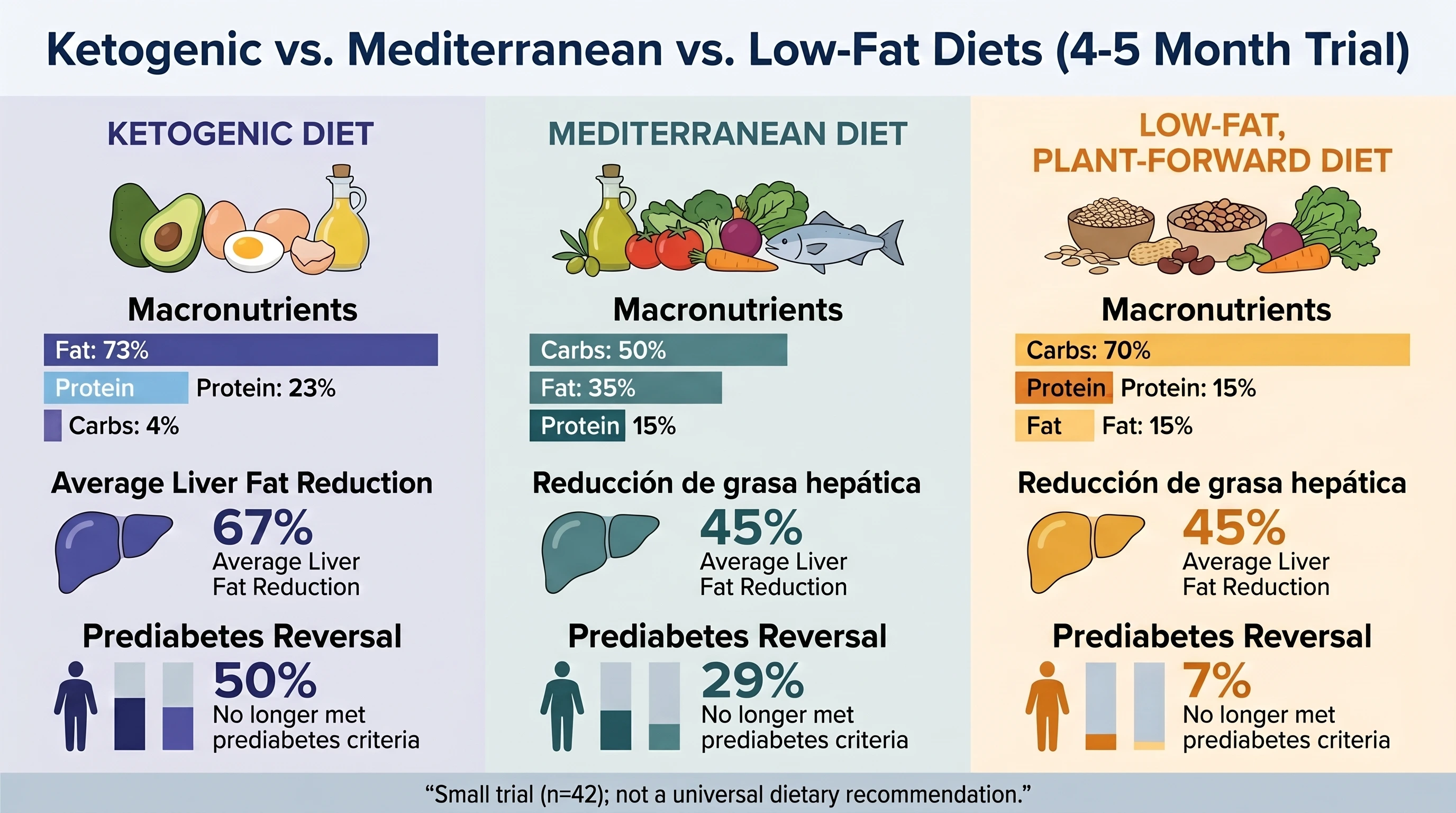
Forty-two adults were randomly assigned to one of three diets: ketogenic (about 4% of calories from carbohydrates, 73% from fat), Mediterranean (about 50% carbohydrates, 35% fat), or low-fat, plant-forward (about 70% carbohydrates, 15% fat). All food was supplied, a dietitian met participants weekly, and calories were adjusted so each group lost about 10% of body weight over four to five months.
Equalizing weight loss let researchers ask whether diet composition matters beyond the weight lost.
Key findings:
All three groups reduced body fat and improved insulin sensitivity.
Liver fat fell by an average of 67% with the ketogenic diet versus about 45% in both other groups.
The ketogenic group showed the largest glucagon rise and insulin fall, shifts that favor mobilizing liver fat.
About 50% of ketogenic participants no longer met prediabetes criteria, compared with 29% (Mediterranean) and 7% (plant-forward).
Blood lipids and cholesterol did not rise in the ketogenic group during the study.
Myths vs. Clinical Reality
Myth 1: "Keto is the best diet for everyone with fatty liver."
With about 14 people per group, the trial offers a signal, not a universal recommendation, and its specific population (obesity, prediabetes, fatty liver) limits extrapolation to type 2 diabetes or advanced fibrosis. All three diets worked; a 45% reduction is itself clinically meaningful. As specialists in the field, we observe that the defensible reading is not "keto wins," but that for a specific group, carbohydrate restriction may add benefits on top of weight loss.
Myth 2: "The results will be the same at home."
All meals were provided with weekly dietitian support, far from everyday life. Very-low-carbohydrate diets are hard to sustain, and research-grade menus differ from improvised low-carb eating.
Myth 3: "Eating more fat doesn't affect cholesterol, so it's harmless."
Stable lipids were observed only during four to five months of active weight loss, when lipids often improve anyway. Long-term maintenance was not evaluated, and some people see substantial LDL increases. As specialists, we consider lipid monitoring reasonable in any supervised dietary change.
Myth 4: "Keto cured prediabetes."
Falling below the diagnostic threshold is encouraging, not a permanent cure; durability is unknown, and glucose regulation also depends on genetics, sleep, activity, and medications.
Myth 5: "If diet composition matters, weight loss doesn't."
Every group benefited from losing about 10% of body weight, still a cornerstone of care. The authors framed diet composition as complementary to other tools, including obesity pharmacotherapy.
Still unknown: effects on fibrosis, cirrhosis, or cardiovascular events, and long-term durability.
When Should You Consult a Specialist?
This research should not be interpreted as an invitation to begin a restrictive diet without professional guidance. Individualized nutritional advice must come from a qualified healthcare professional, such as a physician or registered dietitian who knows your full medical history.
Consider seeking a medical evaluation if:
An imaging study (such as an ultrasound) has incidentally shown fat in the liver.
Routine blood tests have revealed elevated liver enzymes (ALT or AST).
You have been told you have prediabetes, insulin resistance, or metabolic syndrome.
You live with obesity alongside high blood pressure, abnormal cholesterol, or elevated blood sugar.
Seek medical advice before considering a very-low-carbohydrate or ketogenic diet if you:
Take medications for diabetes (particularly insulin, sulfonylureas, or SGLT2 inhibitors), as dose adjustments may be required and some combinations carry specific risks.
Have kidney disease, pancreatic or gallbladder conditions, or a known lipid disorder.
Are pregnant or breastfeeding.
Have a history of disordered eating, for whom restrictive dietary patterns may be inappropriate.
Which specialists are relevant?
A hepatologist or gastroenterologist for evaluating liver health and fibrosis risk.
An endocrinologist for prediabetes, insulin resistance, and metabolic disorders.
A registered dietitian for designing a sustainable, nutritionally complete eating plan.
Your primary care physician as the first point of coordination.
Conclusion
By equalizing weight loss, this trial suggests diet composition may influence liver fat and glucose regulation beyond the scale, at least in this population under controlled conditions. Yet 42 participants over a few months generate hypotheses, not verdicts. The least dramatic message matters most: several effective paths lead to better metabolic health, and the right one depends on the individual.
This content reflects the professional opinion of Dr. Aleksandr Orlov, regenerative medicine physician at PrecisionBio Clinic, provided when consulted about this study, with institutional backing from Carlos López, CEO of PrecisionBio Clinic. It is for general educational purposes only and does not constitute medical or nutritional advice, diagnosis, or treatment. Always consult your primary care physician, a board-certified specialist, or a registered dietitian before changing your diet or medications.