
Gut Microbiome, Brain Chemistry & GABA: What a Human Study Shows
Table of Contents
Introduction: A New Look at the Gut–Brain Axis in Living People
What the Study Actually Measured
Myth 1: "Science has now proven that gut bacteria control brain chemistry and cause anxiety."
Myth 2: "Gut bacteria produce GABA that travels directly to the brain to calm it."
Myth 3: "A probiotic or supplement can raise brain GABA and fix anxiety or poor sleep."
Introduction: A New Look at the Gut–Brain Axis in Living People
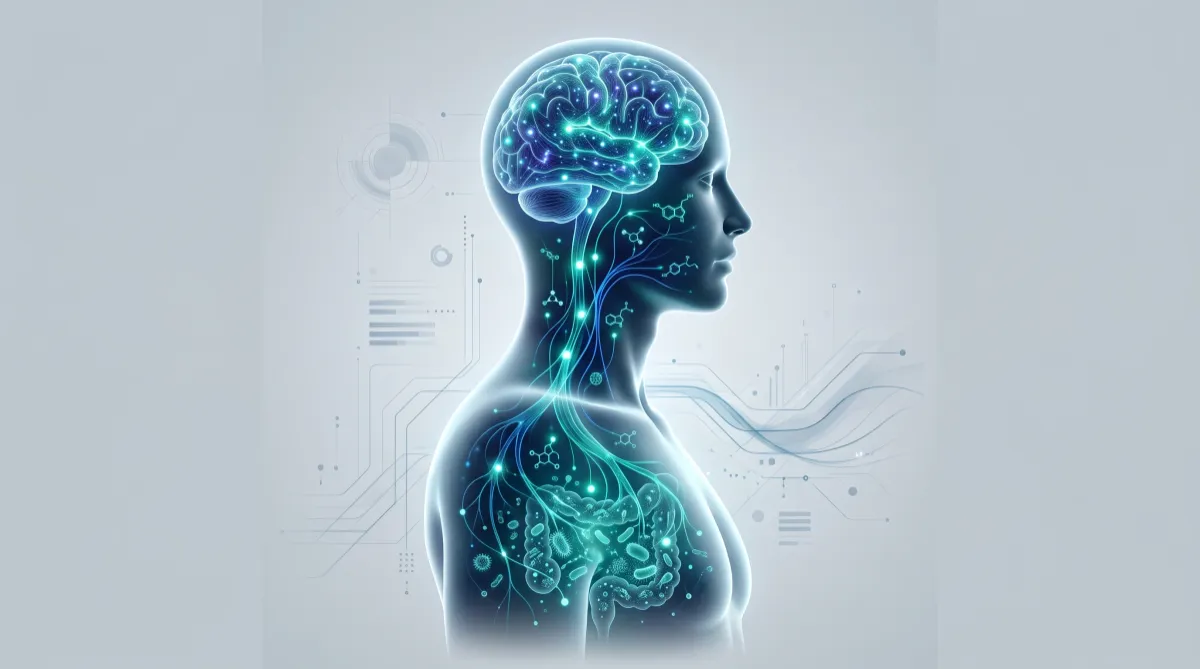
Few areas of biomedical research have generated as many headlines in recent years as the gut–brain axis — the network of nerves, immune signals, hormones and metabolites through which the digestive system and the central nervous system communicate. Much of what is popularly said about it, however, rests on animal and laboratory research, not on direct measurements in people.
That is what makes a study published in September 2026 in Molecular Psychiatry worth examining carefully. Researchers from the University of Surrey and the University of Roehampton (UK) looked at gut microbiome data and brain chemistry in the same living human participants and found that the metabolic potential of gut bacteria was associated with levels of two key neurotransmitters — GABA and glutamate — in specific brain regions.
The finding is genuinely interesting. It is also easy to overstate. Reports of this kind are often translated into claims that "gut bacteria control your mood" or that a particular product can "rebalance" brain chemistry. This article explains what the research on gut microbiome brain chemistry and GABA actually demonstrates, where its limits lie, and how readers should interpret it.
What the Study Actually Measured
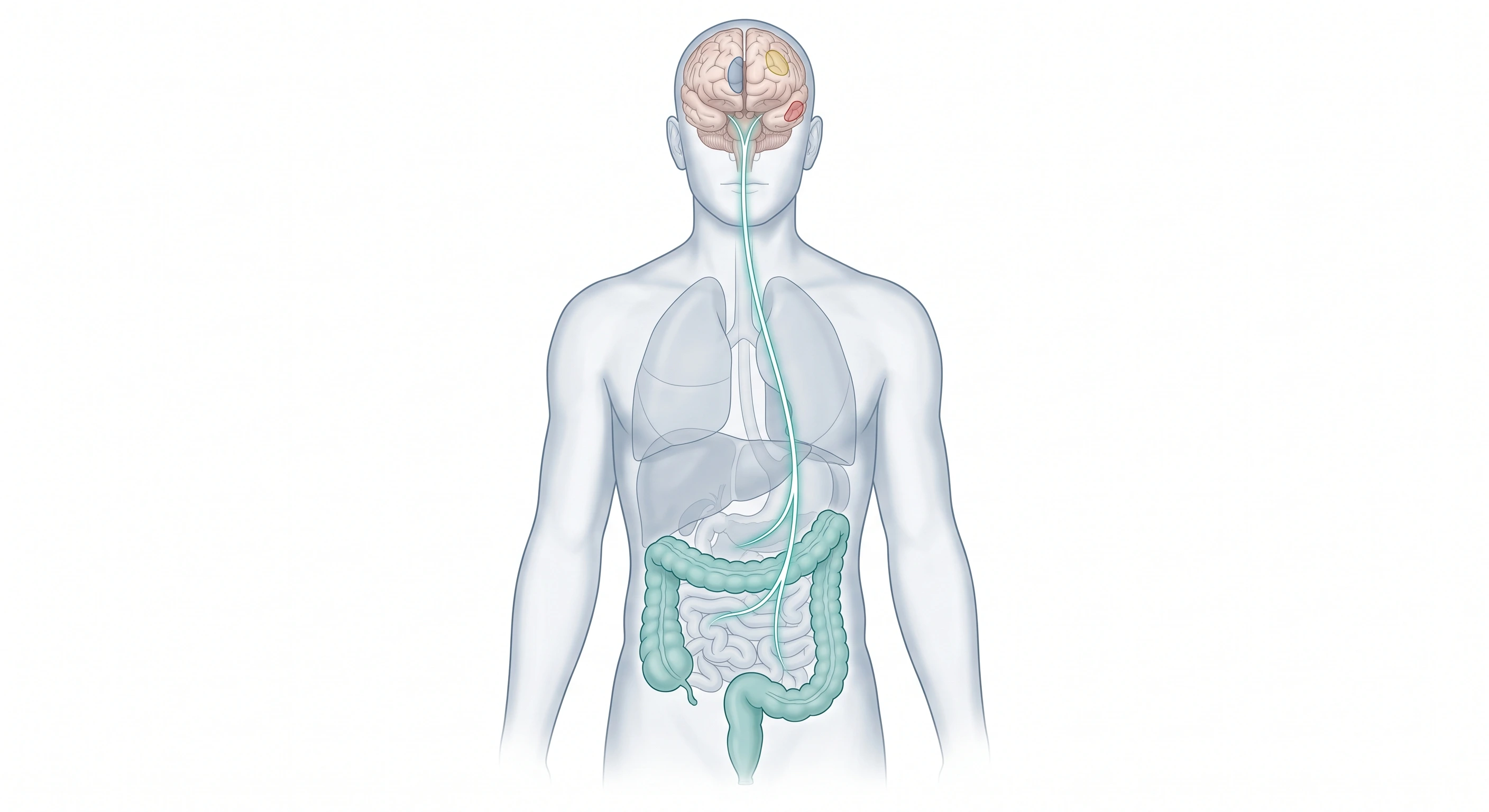
Participants: 61 healthy young women, aged 17 to 25.
Brain chemistry: GABA and glutamate measured by ¹H-MRS in the anterior cingulate cortex, dorsolateral prefrontal cortex and inferior occipital gyrus (a visual comparison region).
Gut microbiome: Shotgun metagenomic sequencing estimating microbes' genetic capacity for GABA, glutamate, short-chain fatty acid, inositol, tryptophan and p-cresol pathways.
Psychological measures: Self-reported anxiety, depressive symptoms and sleep quality.
Key findings: associations were region-specific. The comparison region unexpectedly showed the broadest range of associations; the anterior cingulate cortex was linked to microbial glutamate and propionate pathways, and the dorsolateral prefrontal cortex to a GABA-production pathway. A propionate pathway was associated with poorer sleep. These are associations, not cause and effect.
Myths vs. Clinical Reality
Myth 1: "Science has now proven that gut bacteria control brain chemistry and cause anxiety."
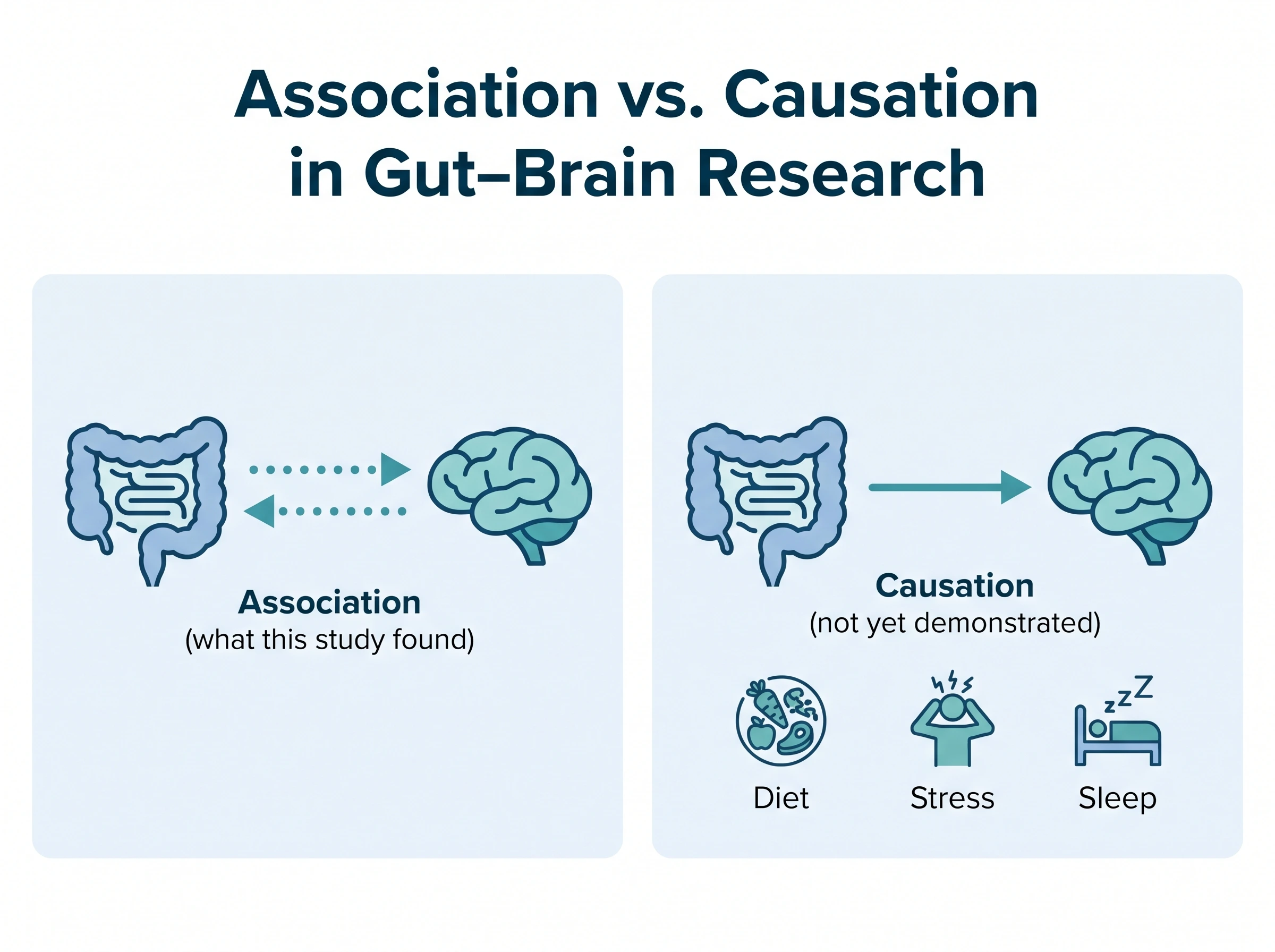
Clinical Reality: The study is cross-sectional — a snapshot that cannot show whether the gut influences the brain, the reverse, or whether diet, stress, sleep, medication or genetics shape both. The lead author does not claim any bacterium causes anxiety. The sample was small (61) and homogeneous, and outcomes were self-reported, not clinical diagnoses.
Specialist note: As specialists in this field, we observe that this study generates precise hypotheses; it does not confirm that the microbiome determines mental health.
Myth 2: "Gut bacteria produce GABA that travels directly to the brain to calm it."
Clinical Reality: Researchers measured microbial genetic potential, not actual metabolites, and traced no molecule from gut to brain. The senior author points instead to possible indirect routes: the vagus nerve, immune signaling, the intestinal barrier and other gut-derived metabolites.
Specialist note: As specialists in this field, we observe that "gut GABA equals brain GABA" is an intuitive but unsupported shortcut.
Myth 3: "A probiotic or supplement can raise brain GABA and fix anxiety or poor sleep."
Clinical Reality: No intervention was tested; that question requires larger longitudinal and intervention studies. The propionate–poorer-sleep link shows microbial metabolites are not simply "good" or "bad," and self-treating with unproven products can delay proper diagnosis.
Specialist note: As specialists in this field, we observe that "gut GABA equals brain GABA" is an intuitive but unsupported shortcut.
When to Consult a Specialist
This research does not change how anxiety, low mood, sleep problems or digestive symptoms should be evaluated. It does reinforce that body and brain are interconnected — which is one more reason to seek a proper medical assessment rather than self-diagnose.
Consider consulting a qualified specialist if:
Anxiety, worry or low mood persist for more than two weeks or interfere with work, study or relationships → consult a board-certified psychiatrist, a licensed clinical psychologist or your primary care physician.
Sleep difficulties (trouble falling or staying asleep, unrefreshing sleep, excessive daytime sleepiness) last more than a few weeks → consult your primary care physician or a sleep medicine specialist.
Persistent digestive symptoms — chronic bloating, changes in bowel habits, abdominal pain — occur alongside mood or sleep changes → consult a board-certified gastroenterologist.
Warning signs appear, such as unintentional weight loss, blood in the stool, persistent vomiting or severe abdominal pain → seek prompt medical evaluation.
You are considering any supplement or probiotic for mood or sleep, especially if you take prescription medication, are pregnant or have a chronic condition → discuss it first with your physician or pharmacist.
If you are in emotional crisis or have thoughts of harming yourself, contact your local emergency services or a crisis line immediately.
Conclusion
The study moves gut–brain research toward direct measurements in living humans and suggests the relationship is region-specific. Its limits are clear: a small cross-sectional sample, genetic potential rather than metabolites, and self-reported outcomes. It establishes an association — not a mechanism, causality or treatment. Until controlled interventional evidence exists, individualized clinical evaluation remains the reliable foundation for mental and digestive health.
This content reflects the professional opinion of Dr. Aleksandr Orlov of the PrecisionBio team (with Carlos López, CEO) when consulted on the research discussed, and is provided for educational purposes only. It does not constitute medical advice, diagnosis or treatment, and the study described does not establish that gut bacteria cause changes in brain chemistry, mood or sleep. Always consult your primary care physician or a board-certified specialist regarding any questions about your health.