
GLP-1, Statins & Cardiovascular Health: Myths vs. Evidence
Table of Contents
Introduction: A Provocative Essay, Not a New Trial
Myth 1: GLP-1 drugs can replace statins
Myth 2: LDL no longer matters if you are metabolically healthy
Myth 3: Statin side effects outweigh the benefits for most people
Introduction: A Provocative Essay, Not a New Trial
In September 2026, physician-scientist Dr. Nick Norwitz published an essay on his newsletter StayCurious Metabolism titled "GLP-1s May Change Cardiology Forever." The piece opens with an anecdote: a colleague discontinued a patient's statin after the patient lost more than 60 pounds over roughly 18 months on tirzepatide, a dual GLP-1/GIP receptor agonist, and showed improvements in triglycerides, HDL cholesterol, inflammatory markers, and insulin sensitivity.
From that single case, Dr. Norwitz builds a broader argument: that the cardiovascular risk attached to LDL cholesterol depends on metabolic context, that decades of cholesterol-centered prevention have not curbed the rise of obesity and diabetes, and that GLP-1 receptor agonists may redirect medicine's attention from "how low can LDL go?" toward "how metabolically healthy can we make people?"
It is a thought-provoking thesis, and it touches a real shift in the field. But it is important to be precise about what it is: an individual physician's opinion essay, illustrated by one anecdote — not a new clinical study. Much of the essay's supporting analysis also sits behind a paywall, so this review focuses on the publicly available argument and places it against the established body of evidence on GLP-1 therapies, statins, and cardiovascular health.

Myths vs. Clinical Reality
Myth 1: GLP-1 drugs can replace statins
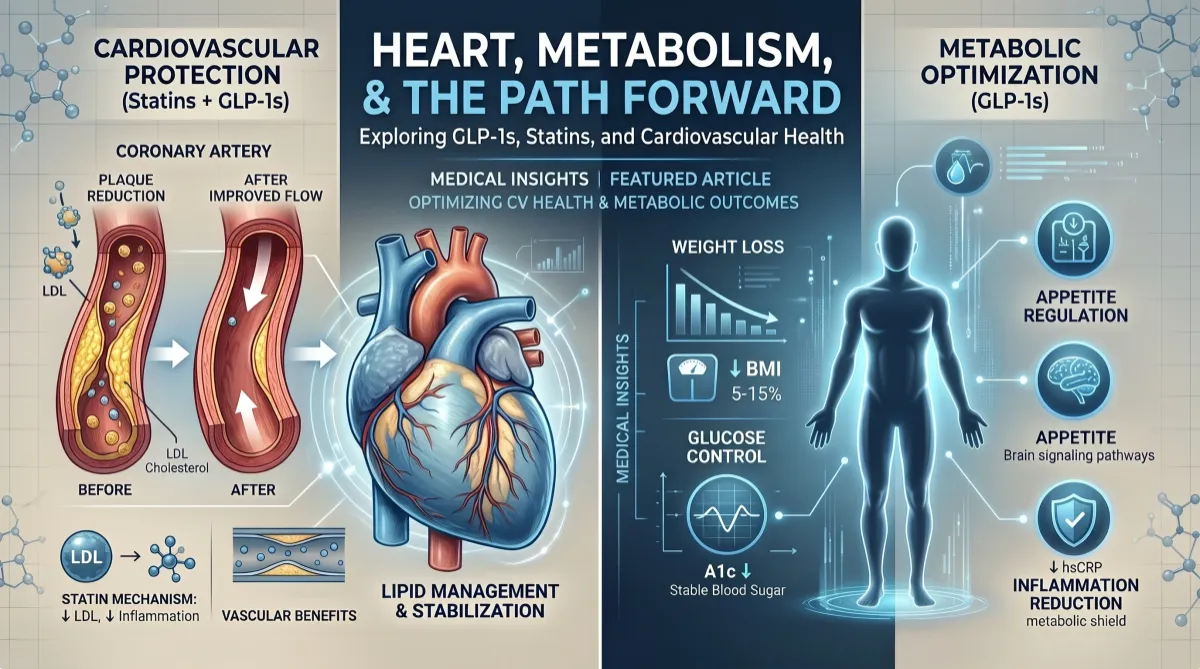
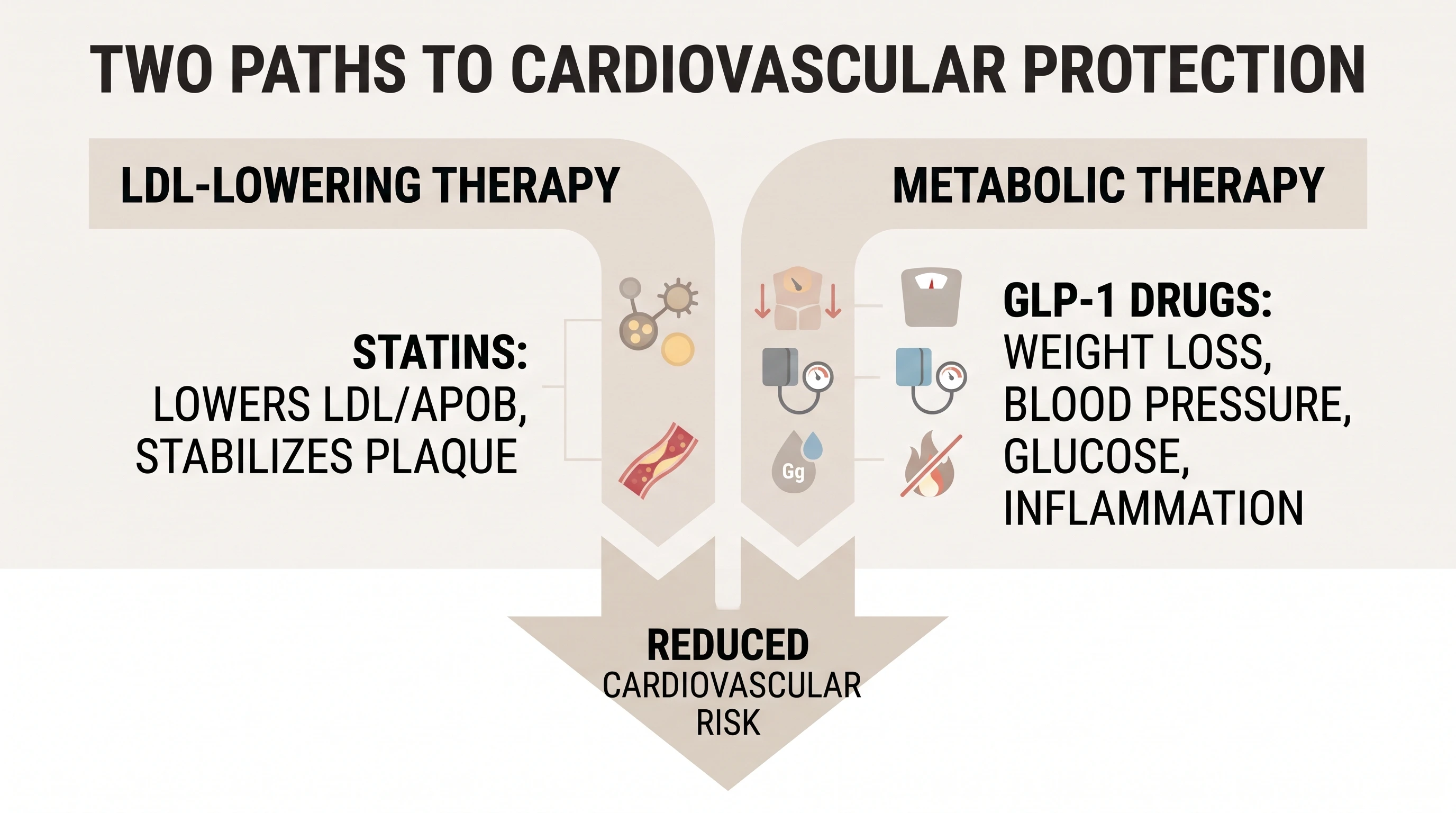
Clinical reality: GLP-1 receptor agonists do provide cardiovascular benefit. In the SELECT trial (NEJM, 2023), semaglutide cut major adverse cardiovascular events by about 20% in more than 17,000 adults with overweight or obesity and established cardiovascular disease, without diabetes. However, those results were achieved on top of standard preventive care, and most participants were already on lipid-lowering therapy. GLP-1 drugs lower LDL only modestly; their benefit appears to come largely through weight, blood pressure, inflammation, and glycemic control. They are complementary to statins, not a substitute, and no randomized trial has tested stopping statins in patients who improve on a GLP-1.
As specialists in the field, we observe that the essay's case reflects an individualized decision by a treating physician. One anecdote cannot set a general rule, and statins should never be stopped without the prescribing physician's supervision.
Myth 2: LDL no longer matters if you are metabolically healthy
Clinical reality: The causal role of LDL and other ApoB-containing lipoproteins in atherosclerosis is supported by genetic studies, epidemiology, and randomized trials; the European Atherosclerosis Society's 2017 consensus concluded that LDL causes atherosclerotic cardiovascular disease. Dr. Norwitz is right that absolute risk depends on context, which is why risk calculators already weigh blood pressure, diabetes, smoking, and age. But context-dependent risk is not zero risk: lifetime LDL exposure still matters, and people with familial hypercholesterolemia face high risk regardless of metabolic health.
As specialists in the field, we observe that the productive framing is "LDL and metabolic health," not "LDL versus metabolic health." Both are measurable and modifiable.
Myth 3: Statin side effects outweigh the benefits for most people
Clinical reality: Statins carry a small documented rise in new-onset type 2 diabetes (about 9% relative increase in a 2010 Lancet meta-analysis), mostly in people already near the diagnostic threshold, and blinded trials suggest true statin-related muscle symptoms are less common than reported. The essay suggests benefits shrink in metabolically healthier subgroups, but pooled analyses from the Cholesterol Treatment Trialists' Collaboration show consistent proportional risk reduction per unit of LDL lowered, including in lower-risk groups, though absolute benefit is smaller when baseline risk is low. This is why guidelines favor shared decision-making.
As specialists in the field, we observe that subgroup analyses generate hypotheses but are statistically fragile; the question deserves prospective study.
What the Evidence Actually Supports
GLP-1 receptor agonists reduce cardiovascular events in well-studied populations, including type 2 diabetes (LEADER, SUSTAIN-6) and obesity with established cardiovascular disease (SELECT). Statins remain a cornerstone of prevention. Metabolic health is increasingly recognized as a central driver of risk, and reassessing risk after major metabolic change is legitimate under medical supervision. What remains unproven is that GLP-1-driven improvement can safely replace lipid-lowering therapy across broad patient groups.
When to Consult a Specialist
If you are taking a statin, a GLP-1 medication, or both, consider an evaluation with a board-certified cardiologist, endocrinologist, or preventive medicine physician in the following situations:
You have lost significant weight or seen major changes in blood pressure, glucose, or lipid levels and want your cardiovascular risk recalculated.
You are experiencing side effects you believe may be related to your statin (persistent muscle pain, weakness, or changes in blood glucose). Report them rather than stopping the medication on your own.
You have a family history of early heart disease or very high cholesterol, which may indicate a genetic lipid disorder.
You are considering a GLP-1 medication for weight or metabolic health and want to understand how it fits with your current cardiovascular prevention plan.
You want a deeper risk assessment, which may include ApoB, lipoprotein(a), or coronary artery calcium (CAC) scoring, as determined by your physician.
Important: Never discontinue, reduce, or replace a statin based on online articles, essays, or personal anecdotes. Any change to cardiovascular medication should be decided together with your prescribing physician.
Conclusion
Dr. Norwitz's essay captures a real shift: metabolic health is becoming a primary cardiovascular target, and GLP-1 therapies are accelerating it. Yet the evidence does not support choosing between GLP-1 drugs and statins. Current data show GLP-1s add protection alongside standard lipid-lowering care, while LDL's causal role in atherosclerosis remains well established. Prevention is becoming broader and more personalized, with decisions reassessed by qualified physicians.
This article reflects the professional opinion of Dr. Aleksandr Orlov of the PrecisionBio team, provided when consulted on the topic discussed, with institutional support from Carlos López, CEO of PrecisionBio. It is intended for educational purposes only and reviews an opinion essay by independent physician Dr. Nick Norwitz; it is not a new clinical study. This content does not constitute medical advice, diagnosis, or treatment. Do not start, stop, or change any medication, including statins or GLP-1 receptor agonists, without guidance from your primary care physician or a board-certified specialist.